Archaeological Sites
Egypt's Greatest Ancient Monuments
Verified guides to the outdoor sites that define Egypt's heritage landscape. Ticket systems explained, access conditions confirmed, and crowd-timing advice based on direct observation.
East Bank, Luxor
Karnak Temple Complex
Karnak was not built at a single moment by a single pharaoh. It was constructed, extended, demolished in parts, and rebuilt continuously from the Middle Kingdom (c. 2000 BC) through the Ptolemaic period (c. 30 BC) — a span of nearly 2,000 years. What survives is therefore a layered architectural record, and the most rewarding way to experience Karnak is to understand it as archaeology, not as a single unified design.
The complex is divided into precincts dedicated to three deities: Amun (the largest and most visited), Mut, and Montu. Most visitors see only the Amun precinct. Within it, the Great Hypostyle Hall is the dominant experience: 134 papyrus-shaped columns, the tallest standing 21 metres, arranged in 16 rows and decorated on every surface with carved and painted reliefs. The central aisle columns are wider in diameter than most European cathedrals, and the light filtering through the clerestory creates an atmosphere unmatched in ancient architecture.
The Open Air Museum in the northeast corner of the Amun precinct is frequently missed. It contains the reconstructed White Chapel of Senusret I — a jewel of Middle Kingdom relief carving — and the reconstructed Red Chapel of Hatshepsut, assembled from blocks reused in later construction. These two structures alone justify a separate ticket (EGP 200 supplemental) and 45 minutes of focused attention.
Entry: EGP 450 general admission, EGP 200 Open Air Museum. Open 06:00–18:30 daily. The site is substantially more pleasant at opening time (06:00–09:00) than at midday. The sound-and-light show runs three times per evening in rotating languages; tickets are separate and available at the Karnak Sound and Light office. Our Guided Tours page includes recommended licensed guides specialising in Karnak's architectural history.
Route Advice
How to Move Through Karnak
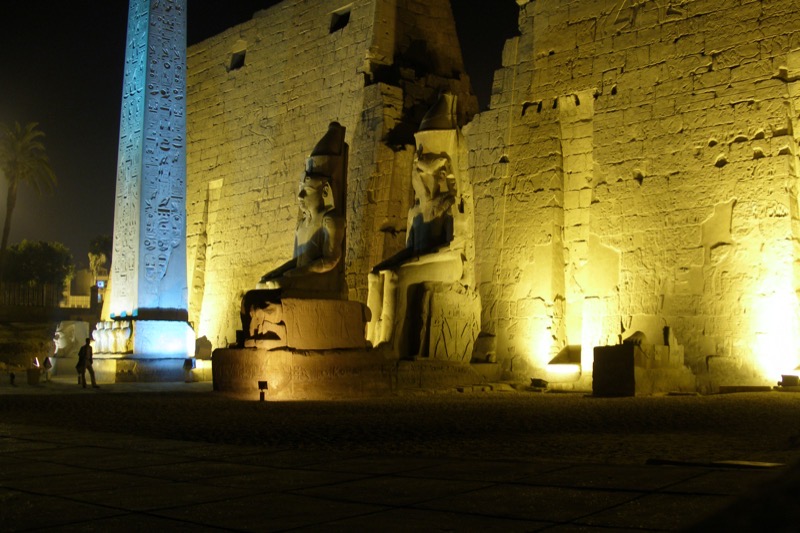
Enter through the First Pylon (currently under partial scaffold), walk the processional avenue of ram-headed sphinxes, cross through the Hypostyle Hall from west to east, visit the sacred lake, and continue to the Festival Hall of Thutmose III (Akh-menu) before doubling back to the Open Air Museum. This sequence takes approximately 3 hours at a comfortable pace. Do not try to see all six precincts in one visit.
West Bank, Luxor
Valley of the Kings
The Valley of the Kings (Wadi el-Muluk) served as the royal burial ground for the pharaohs of the New Kingdom from approximately 1539 to 1075 BC. Sixty-three rock-cut tombs have been identified and numbered (KV1 through KV64, with KV62 being Tutankhamun's). Most tombs descend through a series of corridors and antechambers into a burial hall, with the walls and ceilings entirely covered in religious texts and paintings drawn from funerary literature — the Amduat, the Book of Gates, the Book of Caverns — that guided the deceased king through the underworld.
The ticket system requires careful attention. The standard admission ticket (EGP 500) covers entry to the valley and access to any three tombs from the current rotation list. Tutankhamun (KV62) costs an additional EGP 500. Ramesses V/VI (KV9) — which has the most complete and best-preserved decoration of any open tomb — requires the standard ticket and a supplemental EGP 200. The tomb of Seti I (KV17), when open, requires a separate premium ticket. We publish the current rotation list in our full guide, updated quarterly.
Photography inside the tombs is strictly prohibited. The prohibition is enforced by guides stationed inside each tomb and by CCTV. Camera equipment has been confiscated from visitors who violated this rule. Do not attempt to photograph covertly. The decoration is of such quality that professional photographs are widely available in publications and online; a personal snapshot adds nothing to the experience.
Arrive no later than 07:00 to visit Tutankhamun's tomb before the tour groups arrive. By 09:30 the tomb has a queue of 30–60 minutes. The small burial chamber — in which the mummy still rests in its outermost coffin — holds only 10–12 people at a time and requires a personal encounter uncontaminated by crowds to be properly moving. For more multi-site strategies, visit our Visitor Handbook.
Open 06:00–17:00 daily. The tuk-tuk trains that run inside the valley between the entrance gate and the tomb areas cost EGP 10 per trip and are a reasonable convenience in summer heat; in winter, the 15-minute walk is pleasant.
Giza Plateau, Cairo
Giza Pyramid Complex
The Giza Plateau requires more practical preparation than any other site in Egypt, primarily because the tiered ticket system is genuinely confusing and the unlicensed guide and ride-hire economy around the site is the most aggressive in the country. A visitor who arrives unprepared will lose both time and money. A visitor with our guide will navigate both problems.
The basic plateau entry ticket (EGP 460) covers access to the entire plateau, the Sphinx Enclosure, and the three pyramid compounds. It does not include entry to any pyramid interior. The Great Pyramid (Khufu, KV1) interior costs an additional EGP 600 and admits visitors to the Grand Gallery and burial chamber via a steep interior ramp. Only 300 tickets are issued per day, split between two morning and two afternoon sessions; these sell out by mid-morning in peak season (October–April). The Khafre Pyramid interior (EGP 200) and the Menkaure Pyramid interior (EGP 180) are usually available on the day.
The three classic photography positions for the pyramid alignment are: the desert road south of the Menkaure pyramid (accessible by on-foot or camel route, no extra charge), the elevated plateau viewpoint accessible from the west side, and the panoramic platform above the sound-and-light theatre. The last is the most visited and accordingly crowded from 09:00; the first is the least visited and the most dramatically desolate.
The Sphinx can be photographed without charge from the enclosed Sphinx enclosure (included in the general ticket) and from the upper terrace above the Khafre valley temple. For a complete West Bank full-day experience including both Giza and the GEM, see our suggested combined itinerary in the Seasonal Calendar page.
Open 08:00–17:00 daily. Camel hire is legal, licenced, and priced by the Ministry of Tourism; ask to see the guide's identification and insist on a price before mounting. The standard circuit (Great Pyramid to panorama point to Sphinx, approximately 45 minutes) should cost no more than EGP 350–450 as of 2026.